



The "Made in Germany" trap in Montenegro
The "Made in Germany" trap in Montenegro describes a risk pattern in construction, renovation and trade: providers advertise German quality, German craftsmanship or German standards without clearly disclosing the role, evidence, execution, insurance and liability on site.
This is particularly effective when German investors, owners or developers are not yet familiar with the local market. Language, origin and a familiar appearance create trust. However, it is not the signal of origin that is decisive, but whether competence, qualifications, capacity and responsibility are actually tangible in Montenegro.
- Problem: German appearance is no substitute for a certified construction, craftsmanship or execution structure.
- Audit benchmark: role, responsibility, proof of qualifications, insurance, capacity, network and real service chain.
- As a result, weaknesses often only become apparent later in terms of quality, delays, rework, liability or disputes over responsibilities.
Why this trap is risky
Many Germans make construction, renovation or investment decisions in Montenegro in an unfamiliar environment. The language, material routes, responsibilities, construction practices and local processes differ from Germany. It is precisely in this situation that German names, the German language and familiar promises of quality have a particularly strong impact.
It becomes critical when this trust is sold without disclosing the practical service chain. A promise of quality does not become true just because someone speaks German or uses Germany as a reference.
Anyone procuring locally in Montenegro, working with local teams or using subcontractors must be able to show who is actually carrying out the work, who is responsible for the technical aspects, which materials are being used and who is responsible in the event of a problem. In the case of larger projects, it should also be checked at an early stage whether the building permit, urban planning and verification situation in Montenegro fit together perfectly.
This is particularly sensitive for property developers, project initiators, electrics, plumbing, water, finishing, painting and renovation. Unclear roles become expensive as soon as quality, deadlines, rectification or liability become practically relevant.
The risk is not the nationality of a provider. The risk is a construction of trust without proof, company, capacity, insurance and a clear logic of responsibility.
This is particularly critical in practice:
- Property developers and project initiators: when quality and safety are promised, but the network, capacity and execution chain remain unclear.
- Electrics, plumbing, gas and water: when sensitive activities are sold without providing proper technical evidence and responsibility.
- Expansion and renovation: when German craftsmanship is claimed, but the actual execution is organized locally and hardly controlled.
- Turnkey services: if the supplier primarily sells or coordinates, but is not set up as a tangible exporter.
- Material promises: when German standards are advertised, even though local procurement, systems and processing are different.
- Insurance and liability: if it remains unclear who is insured, what is covered and which claims are actually enforceable in the event of damage.
Typical patterns
The trap rarely arises from a single sentence. The combination of a German signal of trust, an unclear provider role, a weak verification basis and far-reaching responsibility for construction, expansion or technical trades is risky.
Sample 1 - German appearance instead of tangible company
The provider appears familiar, speaks German and uses proximity to Germany as a signal of trust. However, the company, role, network, capacity and responsibility remain unclear.
Core problem: cultural proximity is no substitute for a performance structure.
Sample 2 - Quality promise without derivation
German standards, German craftsmanship or German construction quality are advertised, although materials, teams, processes and control do not visibly bear this claim.
Core problem: Origin is not a technical proof of quality.
Pattern 3 - Devaluation of local suppliers as a sales strategy
The local market is openly or subliminally denigrated. The provider presents itself as a German counter-solution. This sounds plausible to unsettled investors. But nothing has been proven yet.
Consequence: Trust arises from demarcation rhetoric instead of verifiable facts.
Model 4 - Execution by third parties, responsibility in the fog
The contract is sold, but the work is carried out by local subcontractors, changing teams or unclear trades.
Core problem: a clear quality chain is sold, but a diffuse construction site reality is delivered.
Pattern 5 - Qualification is assumed instead of proven
Particularly in the case of technical or qualification-related activities, competence is claimed without presenting qualifications, qualifications, recognitions or specialist documents.
Core problem: professional legitimacy must not be assumed, but must be checked.
Sample 6 - Insurance and liability remain marginal issues
There is a lot of talk about quality, speed and results. Insurance, cover, allocation of responsibility and enforceability, on the other hand, are rarely discussed.
Core problem: good sales rhetoric is no substitute for a secure liability logic.
Audit trail: Cleanly checking construction and trade suppliers
The decisive factor is not how German a provider appears. What matters is whether the role, responsibility, qualifications, insurance, capacity and local execution are comprehensible.
- Check role: Does the provider act as developer, executor, site manager, intermediary, coordinator or initiator?
- Check the company: Is a registered company recognizable and are the name, PIB, activity, representative and address correct?
- Check who is responsible: Is it clear who makes decisions, provides technical guidance and is available in the event of a problem?
- Check proof of qualifications: Can professional qualifications, licenses, endorsements or subject-related documentation be provided?
- Check insurance: Is it clear which policy exists, who it covers and for which activities?
- Check capacity: Are there real teams, subcontractors, references and a service chain that fits the project?
- Check material and quality logic: Do the advertised standard, procurement and actual processing match?
- Check enforceability: Against whom can claims realistically be directed in the event of a dispute?
Testing without the self-service trap
Official registers and information from authorities can help with plausibility checks. However, they are no substitute for technical, legal or project-related checks. ekosphere therefore not only classifies individual documents, but also checks whether the role, company, evidence, execution chain and responsibility fit together.
When it comes to construction coordination, quality assurance or ongoing monitoring, construction supervision in Montenegro is often the next sensible inspection step. For providers from Ulcinj or the surrounding area, the page Checking construction companies in Ulcinj can also serve as an in-depth thematic review.
Critical situations and red flags
Not every German appearance is problematic. It becomes critical where great promises of quality meet unclear roles, a lack of evidence or a marketing façade without operational depth.
Particularly critical
- Property developers or project developers without a verifiable local network
- Technical trades with claimed expertise but unclear evidence
- Turnkey projects with diffuse subcontractor structure
- Suppliers who sell primarily with origin and self-presentation
- Services without clear insurance, liability and responsibility
- Material quality that is only claimed and not specified
- Setups in which sales, construction supervision and execution are combined
Typically misjudged
- "He's German, so the quality will be German."
- "They speak German, so everything runs according to German standards."
- "If it says German quality on it, it will contain German craftsmanship."
- "Local teams certainly work exactly like in Germany."
- "Evidence can be clarified later."
- "Insurance is only relevant when something happens."
- "A good demeanor is enough to build trust."
Typical red flags are blanket promises of quality, devaluation of local providers, unclear roles, lack of evidence, diffuse insurance, evasive answers and lots of marketing with little verifiable substance.
- "German quality" without derivation: the promise of quality remains generalized.
- Being German as an assertion of quality: Origin is more important than proof and execution.
- Devaluation of local providers: Locals are talked down to in order to present themselves as a safe solution.
- Unclear role: It remains unclear whether the provider executes, mediates, coordinates or only sells.
- No tangible responsibility: It is unclear who leads, decides and stands up in the event of a problem.
- Weak project structure: Network, service chain and capacity are not comprehensible.
- Evasive behavior: Questions about teams, insurance, evidence or liability are softened.
The greater the promise of quality and the weaker the real structure behind it, the more expensive the subsequent correction will be. Sounds banal. But surprisingly often it is only discovered after the down payment.
Typical consequences of weak provider setups
The damage rarely becomes apparent at the first meeting. It becomes apparent later, when quality, time, liability, rectification or responsibility become practically relevant.
- Quality deviations: Advertised standards and actual execution fall apart.
- Additional costs: Reworking, reassignment, corrections and delays make the project more expensive.
- Liability gaps: It remains unclear against whom specific claims can be directed.
- Insurance problems: In the event of a claim, it becomes apparent that cover, responsibility or liability were not properly clarified.
- Dependence on people: The customer depends on promises and improvisation instead of a sustainable organization.
- Scheduling conflicts: Lack of capacity and weak networks lead to failures and delays.
- Conflicts during rework: Everyone refers to third parties, subcontractors or old agreements.
The most expensive mistakes do not result from too little advertising, but from too much trust with too little proven structure.
Why ekosphere
This site is deliberately the counter-model to the "Made in Germany" trap. ekosphere does not work with romanticism of origin or quality rhetoric, but with role testing, documentation and a realistic assessment of what is tangible, verifiable and practically enforceable in Montenegro.
- Structure instead of narrative: role, responsibility and performance chain are clearly separated.
- Evidence instead of a signal of origin: The decisive factor is not who calls themselves what, but what can be presented.
- Realism instead of marketing: material, design, network and local feasibility are soberly examined.
- Liability and insurance proximity: Responsibility and protection are not hidden.
- Clear expectation: Before commissioning, it is clarified whether a provider just sounds good or is suitable for the specific project.
In the case of real estate or project purchases, the vendor audit is often combined with a real estate audit in Ulcinj and Montenegro. If the property developer, estate agent role or project sales are intertwined, the classification under the Real Estate Agents and Developers Act in Montenegro is also relevant.
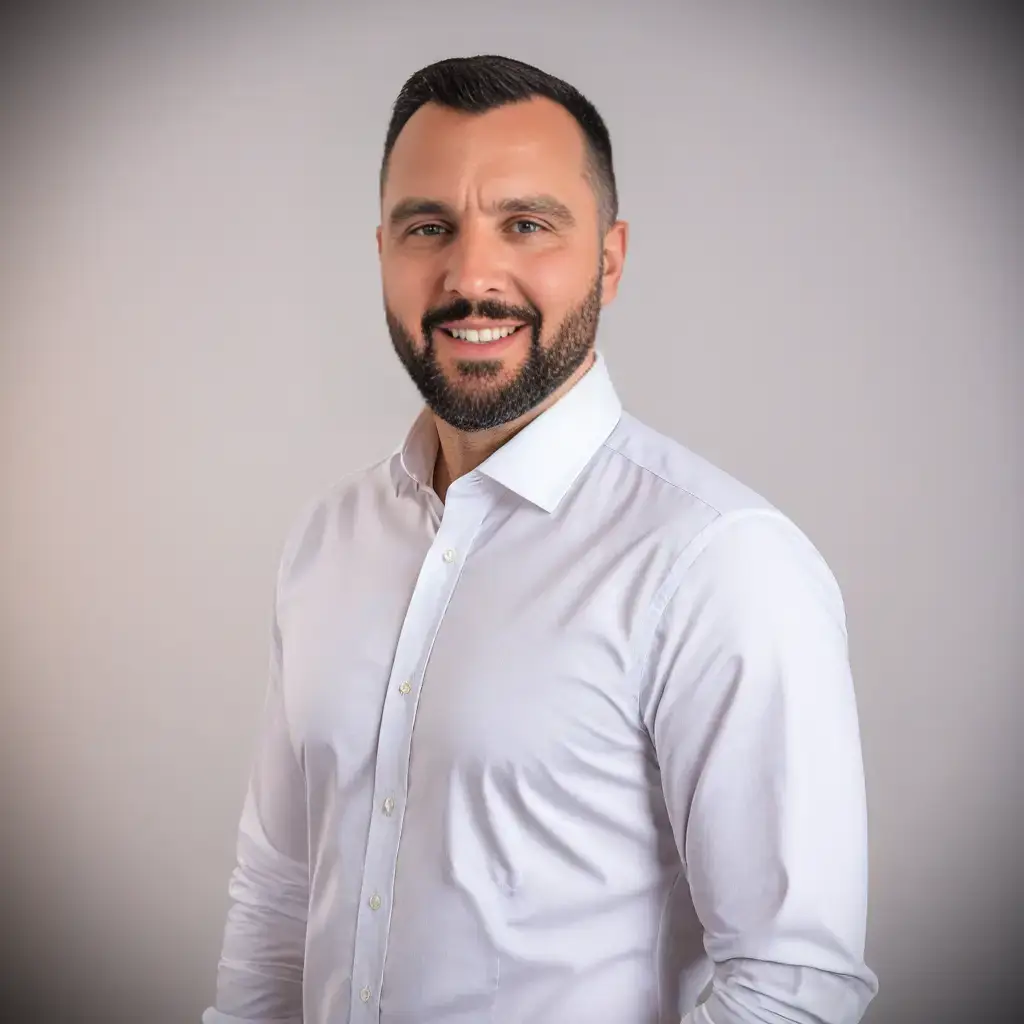
Team on site in Ulcinj
On site, we check the structure, responsibility, evidence and implementation reality so that a German promise of quality does not become an operational misconception.


Classification, audit trail and next step
Not every case needs an immediate in-depth investigation. The first step is usually to sort out the role, company, evidence, insurance and actual execution.
That's why we typically work with construction and craft suppliers in Montenegro in three stages: Brief classification, structure check and setup analysis.
Brief classification
Remote / video call
190,00 €
- approx. 45 minutes
- 1 provider or 1 project constellation
- Initial assessment of role, structure and risk
- Clear next step instead of just a feeling of trust
Structure check
Targeted testing
490,00 €
- Review of role, responsibility and provider structure
- Classification of company, certificates, insurance and red flags
- Comparison of quality assertion and real service chain
- Suitable before commissioning or in case of initial doubts
Setup analysis
In-depth examination
from 790,00 €
- Analysis of project logic, teams, evidence, insurance and liability proximity
- Comparison of quality promise and execution structure
- Assessment of network, handover and control risks
- Useful before a major investment or with an already critical setup
Net prices plus 21% VAT. Depth and expense depend on the provider role, verification situation, insurance situation, project size and the question of whether an initial assessment or an in-depth review is required.
We do not accompany clean-up and reorganization cases as a standard package, but rather after an upstream review and clear prioritization.
FAQ: Checking "German quality" in Montenegro
The "Made in Germany" trap arises where origin and self-presentation are sold as proof of quality, although the company, proof, insurance and design are not clearly tangible.
Is it enough if the provider is German?
No. Origin does not automatically say anything about whether German craftsmanship, German standards or reliable execution quality is delivered in Montenegro. The decisive factors are the company, teams, evidence, control, material logic, insurance and responsibility.
Does "German quality" automatically mean German craftsmanship?
No. "German quality" is only reliable if there is concrete evidence of execution, materials, technical control, quality control and responsibility.
Why is the devaluation of local providers a warning signal?
Because it often generates trust through demarcation rather than proof. Those who only make themselves strong by talking down to locals in general terms are replacing scrutiny with sales rhetoric.
Why are property developers or project initiators particularly sensitive?
Because larger projects without a local network, clear service chain, traceable responsibility and tangible accountability can quickly tip over from the sales phase into an uncertain construction site reality.
What is important when it comes to electrics, plumbing or other trades?
In the case of technical or qualification-related activities, technical evidence, professional requirements, necessary recognitions and the specific responsibility structure should be checked.
Why does insurance play such an important role?
Because good promises are not enough in the event of a claim. The decisive factor is whether insurance, cover, responsibility and liability are clearly regulated.
Can a local team still do a good job?
Yes. The problem is not local or foreign, but an unclear quality claim. The decisive factor is whether the design, control, monitoring and evidence match the standard sold.
How can I recognize a weak provider setup early on?
Early warning signs are blanket promises of quality, unclear roles, a lack of evidence, diffuse insurance, evasive behavior on questions of detail and a lot of marketing with little operational substance.
What should I do if I am already in such a constellation?
Then contracts, roles, documents, responsibilities, insurance cover, project status and practical dependencies should first be secured and reconstructed. The aim is controlled classification, not panic.
Contact & Office in Ulcinj
ekosphere doo
Bulevar Teuta bb
85360 Ulcinj, Montenegro
PIB: 03171868
REG: 50819609
PDV: 82 / 31-02022-6
Bulevar Teuta bb
85360 Ulcinj, Montenegro
PIB: 03171868
REG: 50819609
PDV: 82 / 31-02022-6
For initial contact, classification or appointment coordination, the direct route via telephone, messenger or e-mail is usually the most sensible.
- Phone: +38269344043
- Messenger: +38230681227
- E-mail: office@ekosphere.me
- Opening hours: Mon-Fri 10:00-17:00
- Outside opening hours: by appointment

